



Two German automakers are rolling out bidirectional charging technology to juice up their electric models and consumers’ homes at the same time, saying the move will save drivers money and add convenience.
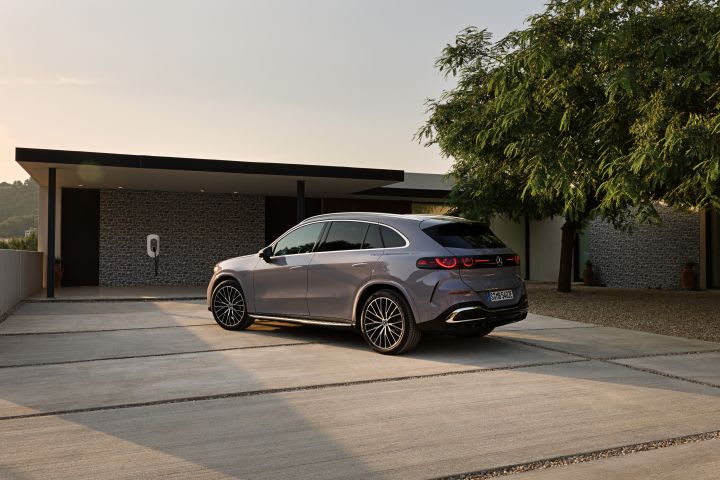
Mercedes said it will introduce the digital MB-Charge system next year with its new EV generational lineup. The vehicles will charge up while feeding electricity into the home or the public electric grid “in a targeted manner.”
The automaker’s new GLC SUV will be the first model to feature the technology, followed by the CLA series.
Mercedes will launch the bidirectional-charging vehicles in its home country, France and the United Kingdom, followed by other markets that it didn’t list in its announcement. The automaker said regulatory obstacles exist in some countries and that it’s working with power companies operating in those to pave the way for the bidirectional charging.
It said such capability has been offered by others separately, while its system will be a “consistent end-to-end experience” controlled from a cellphone application.
Tapping renewable energy, the system includes a wall box sourced from Germany-based charging technology provider Mobility House, which will also provide connection to the public energy grid. “Advice, installation and onboarding come from a single source for a smooth transition to a new charging experience at home,” Mercedes said.
The system takes advantage of the consumer’s schedule and periods of lower electricity rates. Then, when rates are higher and energy availability lower, the EV can feed power back into the grid in return for compensation.
“This turns the vehicle into an active energy source, helps reduce household energy costs, and supports the stability of the power grid,” Mercedes said.
Meanwhile, Volkswagen subsidiary Elli announced a pilot project for bidirectional charging using solar energy on the home end. It says the setup can save up to 75% on EV charging and home power costs.
The modular software platform that connects a home solar power system with the EV and the public power grid makes the vehicle a home energy storage unit, VW said. The technology will also be managed by a phone app.
Open to existing VW models, including passenger cars and some Cupra models, the program will start in Germany and gradually expand across the European Union as part of the union’s transition to renewable energy. VW didn’t mention expansion to overseas markets.
“Bidirectional charging is the enabler of energy self-sufficiency at home, and with the initial rollout of our Managed Battery Network, we are elevating vehicle batteries and storage systems to the level of critical energy resources,” said Elli CEO Giovanni Palazzo. “In doing so, we’re bridging the gap between mobility and energy.”
DOMESTIC ELECTRIFICATION: Ford Dealers Charged Up for EVs