



Crash tests of seven electric vehicles found most meet high road safety thresholds, though two lacked on back-seat passenger protection.
The Insurance Institute for Highway Safety testing included both front- and back-seat crash results. IIHS added back-seat criteria in 2022, and while most of today’s models provide good front-seat protection, it says back-seat safety has a ways to go for many.
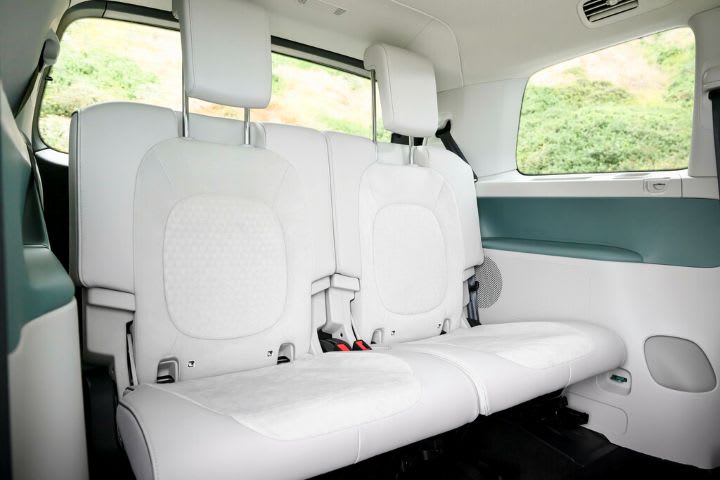
In this testing round, it evaluated 2025 versions of the BMW i4 compact car, the electric Chevrolet Blazer, the Ford F-150 Lightning truck, the Nissan Ariya compact crossover SUV, Tesla’s Cybertruck and Model 3, and the Volkswagen ID.Buzz minivan.
All but the Ariya and the Lightning provide “excellent” driver protection and good back-seat passenger protection, though the Model 3 test showed slightly elevated risk of back-seat passenger chest injury.
The Ariya and Lightning, rated marginal and poor, respectively, also provide good driver protection but have much room for improvement in back-seat safety, according to the test results. The Lightning tests found high risk of head, neck and chest injury in the back seat, in addition to increased risk of internal injury, while the Ariya results showed high risk of back-seat chest injury.
None of the seven EVs earned good headlight ratings, though five of them garnered “acceptable” safety levels. The Cybertruck and the i4 headlights didn’t pass muster, either because of excessive glare or inadequate illumination.
DIG DEEPER: Child Seats Easier to Install in Some Cars